CHARLES
GARNIER

In 1861, Charles Garnier won the anonymous competition to design a new opera house in Paris. He was just 35 years old, still relatively unknown to the general public, and had never before led a project on such a scale.
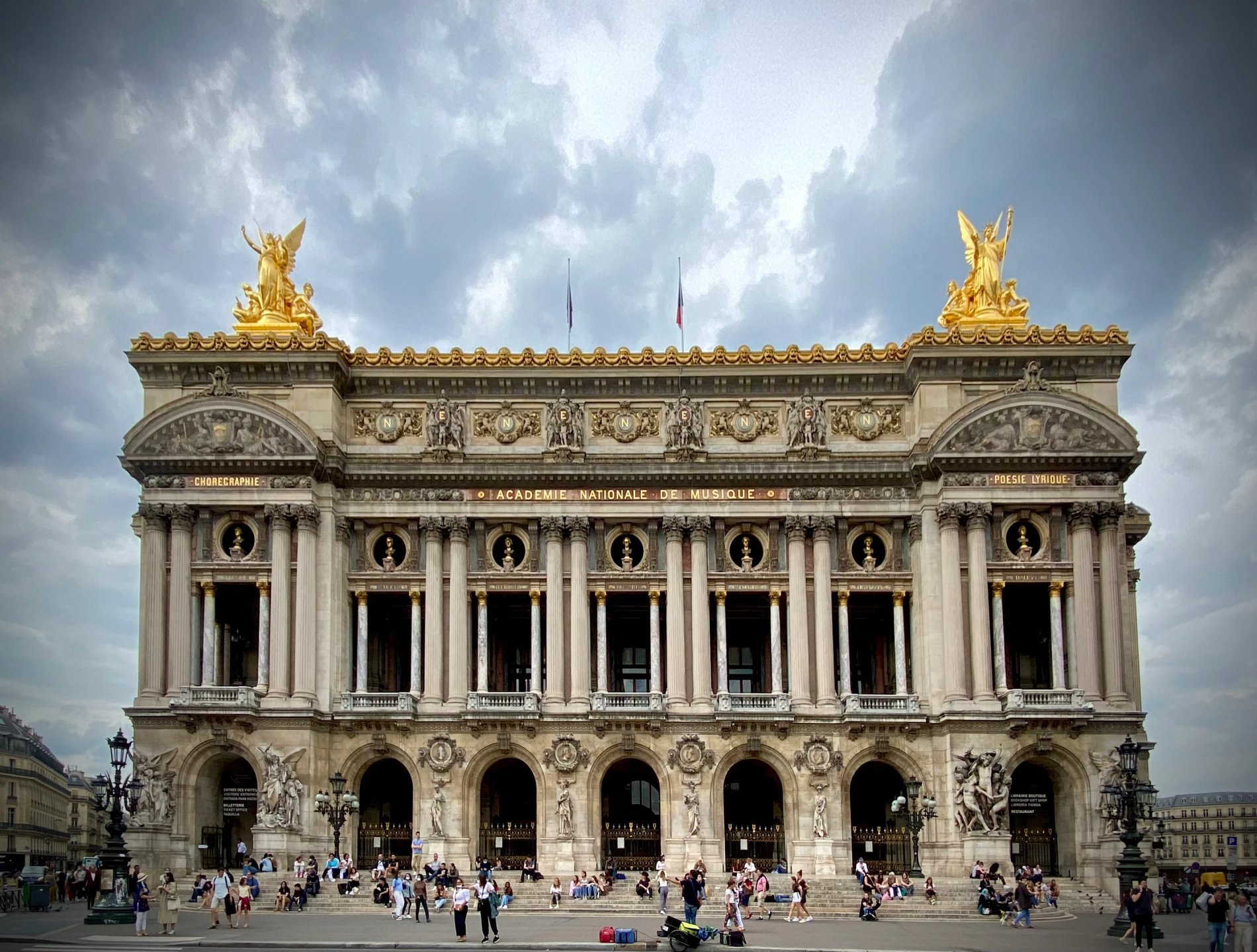
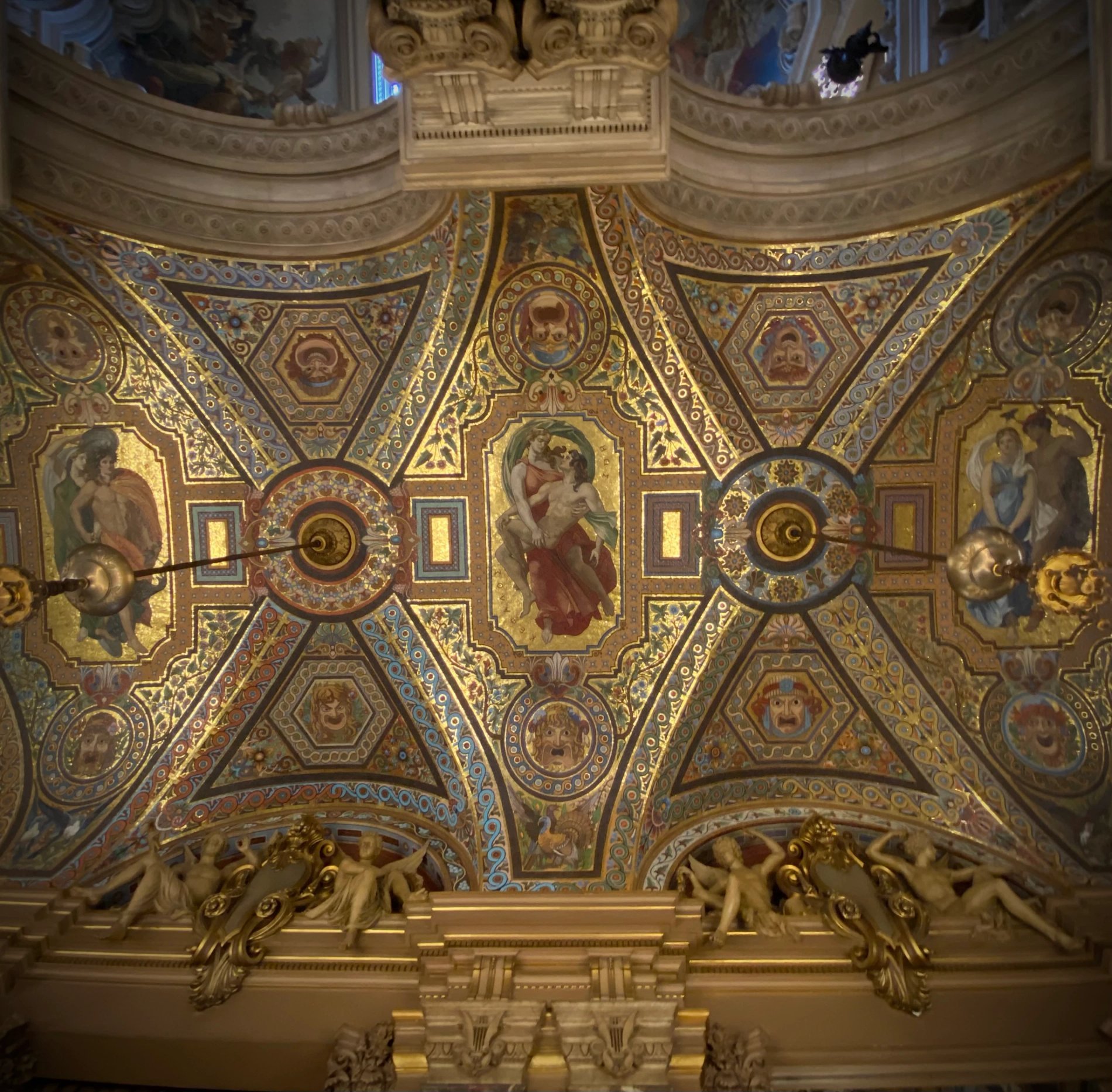
He would devote 14 years of his life to this immense undertaking. Nearly 2,000 workers took part in the construction, which required an extraordinary profusion of marble, gilding, sculpture and painting. Garnier conceived everything: the monumentality of the façade, the vast staircase, the foyers, the circulation spaces and even the smallest decorative details.
When the Opera House opened in 1875, it impressed as much by its scale as by the richness of its decoration. A true Gesamtkunstwerk, it secured Charles Garnier’s place in history and became one of the few major Parisian monuments to bear the name of its architect.
AVENUE
DE L’OPÉRA
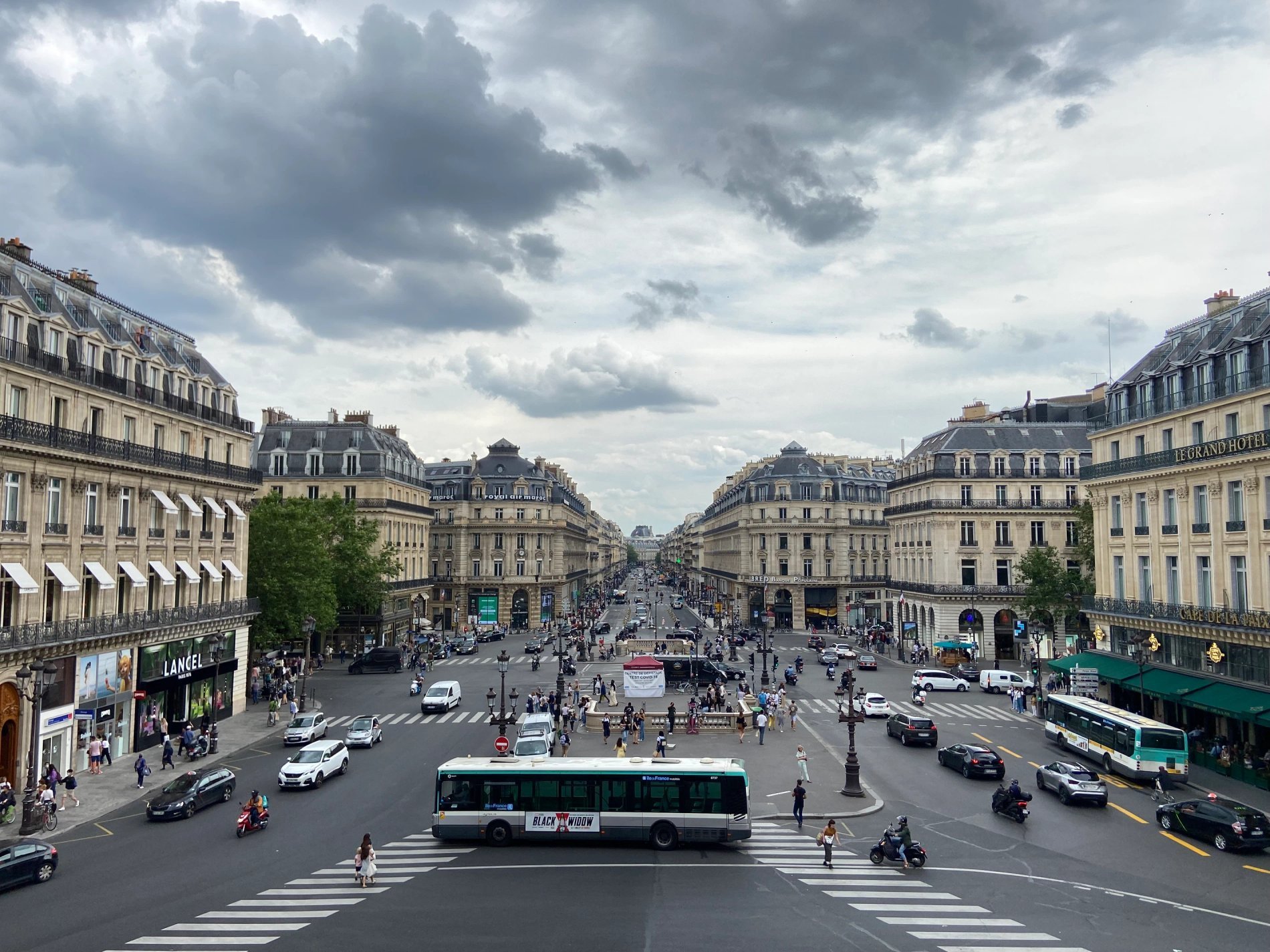
To provide a more direct route from his residence at the Tuileries to the new Opera House, Napoleon III asked Prefect Haussmann to cut a grand avenue through the heart of Paris. The future avenue de l’Opéra offers a majestic perspective towards Charles Garnier’s building and accompanies the transformation of the capital.

The project was immense: a broad thoroughfare had to be opened through a dense and ancient urban fabric, requiring the demolition of numerous buildings and the reshaping of an entire neighbourhood. The avenue became one of the great arteries of Haussmann’s Paris, conceived as much for circulation as for staging the city itself.
Charles Garnier, delighted by such a beautiful perspective on his monument, asked for just one thing: that no trees be planted along the avenue, so that nothing could hide the Opera House façade or interrupt the view for passers-by.
OPÉRA
DISTRICT
The Palais Garnier lies at the heart of the vast transformation of Paris initiated by Napoleon III and carried out by Baron Haussmann. The aim was not simply to build a new theatre: the Opera was intended to become one of the major landmarks of the modern capital, around which an entire district would take shape.
Wide avenues were cut through the city to connect the monument with the Tuileries, the Louvre, the Grands Boulevards and the principal centres of power. These monumental perspectives reflected a new ambition: to make Paris more fluid and easier to navigate, but also more spectacular, with architecture playing a central role in the staging of the capital.
The chosen location was highly strategic. Close to the Bourse and the Grands Boulevards, the Opera stood at the heart of the Paris of business, banking, commerce and the rapidly expanding department stores. Around it gathered theatres, cafés, restaurants, hotels and places of entertainment.
The district thus became one of the great settings of Second Empire Paris: a place to work, to see and be seen, to go out and to experience this new Parisian way of life — social, lively and resolutely modern.